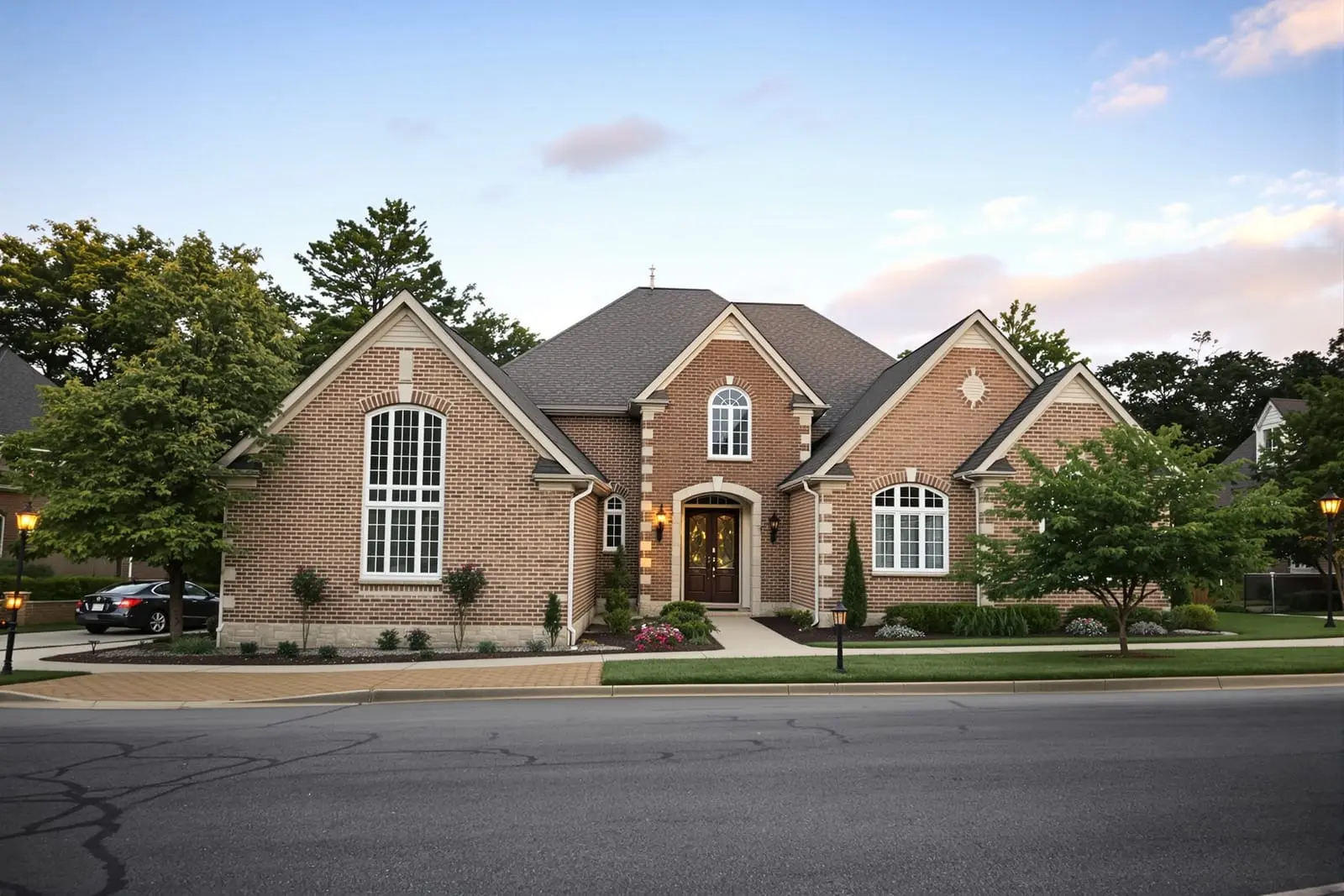
Reliable, professional brick veneer installation in Lexington, KY from Vanguard Masonry Lexington. Contact us today for a free on-site estimate.
Vanguard Masonry Lexington provides professional brick veneer installation throughout Lexington, KY and the surrounding area. Our licensed, insured crew delivers safe, clean, on-time work with a free estimate before anything begins. Call (859) 413-4988 or request your free quote.
Brick Veneer Installation for Lexington Homes and Businesses
Brick veneer installation is one of the most effective ways to give a Lexington property the look and durability of brick without the weight and cost of full masonry walls. Vanguard Masonry Lexington focuses on properly engineered veneer systems that hold up to Kentucky’s freeze-thaw cycles, humidity, and occasional high winds.
Unlike a structural brick wall, a brick veneer is a single wythe of brick tied to a wood or metal framed wall. This means the framing still carries the structural load and the veneer acts as a protective and decorative shell. Done correctly, the system sheds water, allows controlled drainage, and resists cracking and bowing.
In older Lexington neighborhoods like Chevy Chase, Kenwick, and Ashland, we often install veneer on 1920s to 1960s homes that were originally built with siding. For newer builds in areas like Masterson Station, we coordinate veneer installation with builders so the wall system, flashings, and windows are all detailed as a single assembly. The process and details change depending on whether we are working on an older retrofit or a new construction shell.
How Our Brick Veneer Installation Process Works
Every brick veneer installation by Vanguard Masonry Lexington starts with a site and wall assessment. We look at the existing framing, sheathing condition, insulation, and any signs of moisture intrusion inside or out. On retrofit projects, we may remove old siding to access the sheathing, then repair any rot or mold-damaged areas before we even think about hanging brick.
Next, we install or verify the weather-resistant barrier (WRB). This can be high quality housewrap or a fluid-applied membrane, but in Lexington’s climate it must be carefully lapped and taped to direct water down to the flashing, not into the wall cavity. At window and door openings we add flexible flashing tapes and metal head flashings so wind-driven rain is deflected from critical joints.
We then lay out and fasten masonry veneer anchors (brick ties) into studs, not just sheathing. Proper spacing and embedment in the mortar joints is what keeps your veneer mechanically secure. After that, we establish the starter course on a level, sturdy support such as a brick ledge or steel lintel. We check level and plumb repeatedly so any minor variation is corrected early, not after multiple courses of brick are installed.
As bricks go up, we maintain a consistent air gap behind the veneer, usually 1 to 1.5 inches, to allow drainage and ventilation. We install weep vents above foundations, over windows and doors, and at the top of walls as appropriate. Mortar joints are tooled for density and weather resistance, then joints around openings are sealed with compatible sealants, not generic caulk that will fail after a couple of seasons.
Brick and Mortar Options That Fit Lexington Architecture
Brick veneer should look like it belongs on your street and with your style of home. Vanguard Masonry Lexington helps you select brick size, color blend, texture, and mortar finish that match the existing Lexington streetscape or create a deliberate contrast.
For historic-looking cottages and Craftsman homes, we often use tumbled or sand-molded bricks in warm reds and browns, sometimes mixed with darker "smoky" units to echo older full-brick homes in areas like Bell Court. For newer suburban houses and commercial storefronts, we may use wire-cut bricks with sharper edges and more uniform color for a clean, contemporary look.
Mortar is just as important as the brick. Color can be closely matched to the brick for a monolithic appearance, or contrasted in light gray or white to emphasize the pattern. The joint profile matters too. Concave joints are common in Lexington because they shed water well and resist freeze-thaw damage. Raked or struck joints can deliver a more historic appearance but require especially careful detailing to avoid moisture problems.
We also guide you on pattern selection, such as running bond, Flemish bond accents at window heads, or soldier and rowlock courses for visual interest. On commercial facades downtown, we often blend textures and bond patterns in limited accent areas so the building stands out without looking over-designed.
Key Steps to Moisture and Freeze-Thaw Protection
Central Kentucky sees repeated freeze-thaw cycles each winter, along with heavy summer storms. Poorly installed brick veneer in this climate can trap water, cause efflorescence, or even lead to brick faces popping off. Vanguard Masonry Lexington designs every brick veneer installation as a moisture management system first, and a cosmetic upgrade second.
We focus on three parts of the assembly: the drainage cavity behind the brick, the flashing system, and the weeps. The air gap must stay clear of mortar droppings so that any water reaching the back of the bricks can run freely down and out. Our crews use mortar collection devices (like mesh mortar nets) at the base of walls and above openings, and they clean as they go so the cavity does not get bridged.
Flashing is carefully placed at the base of walls, above windows and doors, at roof-to-wall intersections, porch roofs, and anywhere a horizontal surface can catch water. In Lexington, many veneer failures we repair were built without continuous flashing across garage tops or bay roofs. We correct this by opening the veneer, installing through-wall flashing that runs behind the brick and out to the face, then reinstalling the brick.
Weeps, often overlooked by less experienced installers, are placed at consistent spacing and kept open. We use either weep tubes or open head joints, depending on the aesthetic requirements. Finally, we choose brick units that meet ASTM standards for severe weather exposure and use mortar mixes suited to the specific brick, so that the wall can flex slightly without cracking as temperatures swing between summer heat and winter cold.
Cost Factors for Brick Veneer Installation in Lexington
Homeowners and business owners often ask why brick veneer installation costs can vary significantly from project to project. Vanguard Masonry Lexington provides clear estimates that break down the major cost drivers, so you understand what you are paying for and where you can adjust scope if needed.
The first factor is access and complexity. A simple one-story ranch in Gardenside with easy yard access and few wall openings is more economical per square foot than a two-story gable-front home in Kenwick that requires extensive scaffolding, chimney detailing, and custom trim interfaces. Corners, arches, bay windows, and recessed entries all take more time and skill than flat runs of wall.
The second factor is prep work. Removing existing siding, repairing water-damaged sheathing, and correcting prior framing issues can add cost but are critical for a long-lasting veneer. We always document any hidden conditions with photos and discuss repair options instead of burying problems behind new brick.
Material choices also matter. Premium tumbled or handmade brick, special shapes for sills and corners, through-wall flashing membranes, and upgraded WRBs all add cost but can dramatically increase durability and appearance. On commercial jobs or high-end residences, we may also coordinate through-wall flashing with continuous exterior insulation, which affects both labor and materials.
Finally, timing influences price. Coordinating veneer installation during the main construction phase on a new build is more efficient than mobilizing for a small isolated area months later. For existing homes, we schedule around Lexington’s weather patterns, since working in extreme cold or constant rain slows production, which can slightly increase labor cost.
Common Brick Veneer Issues We Repair and Prevent
Because we frequently repair failed brick veneer systems across Lexington, Vanguard Masonry Lexington knows exactly what can go wrong and how to avoid it on new installations. The most common problems we see are cracking, bulging walls, water staining on interior drywall, and efflorescence on the brick surface.
Cracking around windows and doors usually points to missing or improperly installed control joints, or framing movement that has not been isolated from the veneer. When installing new veneer, we place vertical control joints at calculated intervals and at changes in building height or direction, then we use flexible sealants in those joints to accommodate movement. For repair projects, we may remove and relay affected sections, add hidden anchors, and cut new joints where needed.
Bulging veneers often result from corroded or inadequate brick ties, or from a clogged air space that lets moisture build up behind the brick. In severe cases, we carefully brace the wall, remove loose courses, add modern corrosion-resistant anchors, and rebuild the veneer while preserving the original appearance as much as possible.
Interior water stains and efflorescence usually signal missing flashing or blocked weeps. We address this by opening targeted sections of the veneer, installing new flashing and weep systems, clearing the drainage cavity, and then re-laying the brick. On new installations, we design the flashing layout at the planning stage so that critical transitions, such as where a brick veneer meets a roof in neighborhoods with complex rooflines, are protected from the start.
Why Choose Vanguard Masonry Lexington for Your Brick Veneer
Brick veneer is not a simple cosmetic siding job. It is a masonry cladding system that has to work with your framing, insulation, and drainage plan. Vanguard Masonry Lexington combines practical field experience with an understanding of local building conditions and codes in Lexington, so your veneer performs as well as it looks.
We are familiar with the common framing methods in area homes, from older balloon-framed houses near downtown to newer platform-framed homes in outer subdivisions, and we adjust our anchor design and detailing accordingly. We coordinate closely with general contractors, remodelers, and homeowners, making sure window installation, trim work, and roofing are sequenced properly around the masonry.
Every project receives a clear written scope, including wall preparation details, moisture control components, brick and mortar selections, and projected schedule. During the job, we keep the site organized and safe, manage dust and debris, and protect landscaping and hardscapes. At the end, we wash the brick with methods and cleaners that do not damage the mortar or leave streaks.
If you are considering brick veneer installation on your Lexington home or commercial property, we can walk you through design options, structural and moisture considerations, and realistic timelines and budgets. The goal is a veneer that looks right for your building and stands up to Kentucky seasons for decades.
“
Professional brick veneer installation, done right the first time, quality materials, honest pricing, and results that last.