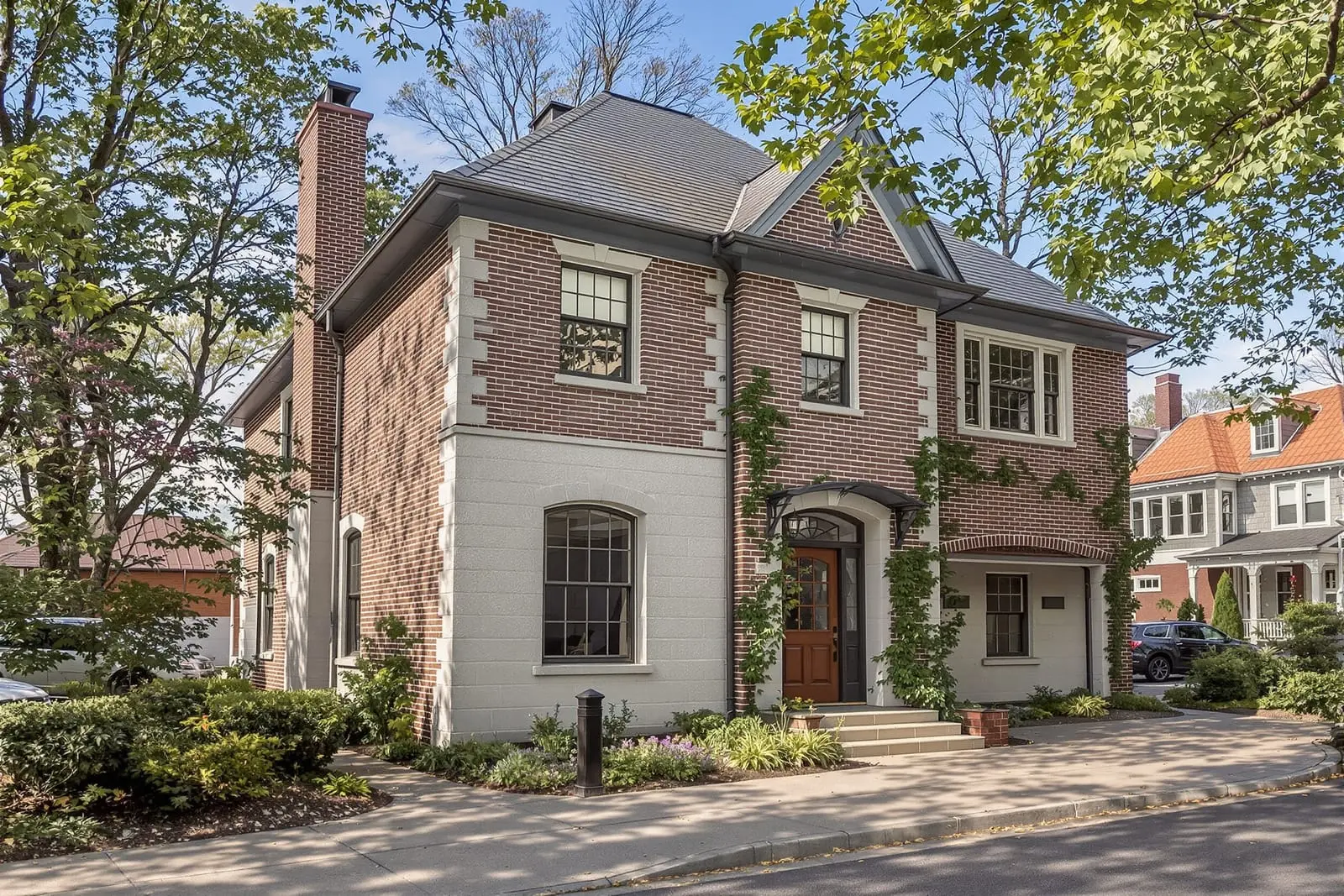
We perform commercial tuckpointing in Lexington, KY to extend the life of brick and stone buildings. Our crews remove failing mortar and repoint joints on facades, parapets, and chimneys. Additional masonry repairs address cracked units, loose sections, and water entry to help protect your investment.
Vanguard Masonry Lexington provides professional commercial tuckpointing throughout Lexington, KY and the surrounding area. Our licensed, insured crew delivers safe, clean, on-time work with a free estimate before anything begins. Call (859) 413-4988 or request your free quote.
Commercial tuckpointing for Lexington buildings that need to stay open
Vanguard Masonry Lexington provides commercial tuckpointing and masonry repair for offices, schools, retail centers, churches, and industrial properties across Fayette County. Our crews are used to working around tenants, customers, and ongoing operations, so the goal is to stabilize your brick or block walls without disrupting business.
On a typical commercial project we start with a full walkaround and close inspection of parapet walls, window heads, control joints, and any areas that routinely get wet or hold snow. In Lexington, the freeze‑thaw cycle and de‑icing salts are the two biggest reasons commercial brick joints fail early. We are looking for hairline cracks, recessed or missing mortar, loose units, and any places where water is tracking into the wall.
You get a written scope that explains where tuckpointing is needed, where deeper masonry repair is required, and which areas can safely be left alone for now. This keeps the project focused on what protects your structure and limits unnecessary work. We can coordinate with your property manager or facility director so information is clear and decisions are made quickly.
How commercial tuckpointing is actually done
On commercial buildings, tuckpointing must be more than scraping and smearing mortar. Vanguard Masonry Lexington follows a consistent process that matches historic or existing joints as closely as possible and avoids damage to surrounding brick.
First, we set up OSHA‑compliant access, typically frame scaffolding or mast climbers for multi‑story facades and swing stages where access from the ground is limited. On downtown Lexington streets, this often means sidewalk protection and sometimes a city right‑of‑way permit if scaffolding extends into public space.
Next, our masons mechanically grind out deteriorated mortar to a depth that is at least twice the width of the joint, usually 1/2 inch to 3/4 inch on commercial brick. We use small diameter tuckpointing grinders with dust collection to reduce silica dust and protect nearby occupants and HVAC intakes.
The joints are then cleaned with compressed air or vacuum and, where necessary, lightly dampened so the new mortar bonds properly and does not dry too fast. We install new mortar in lifts, packing it firmly to eliminate voids. Once the joint has started to set, the surface is tooled to match the original profile (concave, flush, or slightly recessed) so water sheds correctly and the wall has a uniform appearance.
For historic or high‑visibility facades, we can perform true tuckpointing with a base mortar that matches the body of the brick and a fine, contrasting fillet line to recreate the original narrow joint look. This is more labor intensive but is sometimes required by design guidelines in older Lexington districts.
Masonry repair options beyond tuckpointing
Commercial tuckpointing restores mortar joints, but many Lexington properties also need targeted masonry repair. Vanguard Masonry Lexington evaluates each area so we do not just patch symptoms.
If bricks or blocks are spalling, cracked, or have lost their faces, we remove and replace individual units instead of coating over damage. Replacement units are chosen to match size, color range, and texture as closely as available. Sometimes we source from regional yards that carry older Kentucky brick lines or use carefully selected salvage when an exact match no longer exists.
Where entire sections are bulging or have lost bond, we may have to rebuild a portion of the wall. That can include installing proper through‑wall flashing and weep systems at shelf angles or above windows, something many older commercial buildings in Lexington lack. Correcting these details reduces water intrusion and extends the life of the new work.
We also repair CMU (concrete block) walls, especially at loading docks and dumpster enclosures where impact damage is common. In these areas we often reinforce rebuilt sections with grouted cells and rebar and may recommend protective bollards to avoid repeat damage.
If your building shows vertical cracking near corners or at structural columns, we coordinate with structural engineers when necessary. Some issues are cosmetic and solved with tuckpointing and stitching ties, while others indicate movement in the frame or foundation that should be addressed before masonry repair is completed.
What drives cost for commercial tuckpointing in Lexington
Many property owners want to know why two tuckpointing bids can vary so much. Vanguard Masonry Lexington explains our pricing so you can compare estimates fairly and understand what you are paying for.
Key cost drivers include access (how difficult it is to safely reach the work), total square footage of joints to be cut out and repointed, height of the building, and how detailed the mortar color and profile matching must be. A straightforward two‑story office with clean ground access costs less per square foot than a tall building over a busy sidewalk that requires extensive scaffolding, covered walkways, and off‑hours work.
The type of mortar matters too. Historic or lime‑based mortars require more testing and mixing time than standard Type N or Type S mortars, and some projects require custom color matching. We typically create a small test area so you can see the dry color and joint profile before full production starts.
Schedule also affects pricing. If work must be completed in tight windows, such as overnight at a hospital entrance or between academic sessions at a university, we may need larger crews or premium time. Weather is another factor in Lexington, since effective tuckpointing should not be installed on frozen masonry or in extreme heat without protection. Sometimes we include tenting or temporary heat to maintain proper curing conditions.
We break out these elements in our proposal so you can see the difference between labor, materials, access equipment, and any allowances for unforeseen conditions like hidden brick damage behind failing coatings.
Local considerations for commercial masonry work in Lexington
Working on commercial masonry in Lexington involves more than technical skill. Vanguard Masonry Lexington is familiar with local requirements that can affect your project timeline.
Within the city, exterior facade work that alters appearance or involves significant structural repair may require review, especially in historic districts or on prominent downtown buildings. We can coordinate with your architect or engineer to provide photographs, scopes of work, and sample panels if the Board of Architectural Review or another body needs to see them.
For projects that impact sidewalks, alleys, or parking lanes, the city typically requires right‑of‑way permits and sometimes traffic control plans. We help plan staging so your entrances stay open as much as possible, using phased scaffolding, designated entrances for tenants, and clear signage to keep customers and staff safe.
Many Lexington HOAs and commercial associations (such as in mixed‑use developments) require prior approval for exterior work. We provide written descriptions, insurance certificates, and product data sheets so you can submit a complete package and avoid delays.
We also pay attention to building use. For schools and healthcare facilities, work is often confined to breaks or non‑critical hours to reduce noise and dust. We coordinate with your maintenance team about HVAC intake locations so grinding dust is controlled, and we can schedule noisy operations outside of class or visiting hours when required.
How Vanguard Masonry Lexington approaches safety, durability, and scheduling
On commercial tuckpointing and masonry repair projects, safety and predictability are as important as workmanship. Vanguard Masonry Lexington maintains OSHA‑compliant scaffolding, uses fall protection, and implements silica dust control in line with current standards. Before starting production work, we review access paths, emergency exits, and restricted areas with your on‑site contact.
To make repairs last, we select mortar that is compatible with your existing brick or block. Mortar that is too hard can cause bricks to crack at the edges, while mortar that is too soft can wash out quickly in Lexington’s weather. Where needed, we send samples for lab analysis so we can match compressive strength, composition, and color instead of guessing.
We also discuss water management. After tuckpointing, some commercial walls benefit from breathable water‑repellent treatments that reduce moisture absorption without trapping vapor. We explain where this makes sense, such as on highly exposed west‑facing facades, and where it does not, such as on walls that already have moisture issues from the inside.
Scheduling is handled in coordination with your operations. For retail, we often work earlier in the morning and avoid peak customer times near entrances. For industrial facilities, we time work around shipping and receiving. Our goal is to keep your building safe and dry without interrupting how you use it.
When you contact Vanguard Masonry Lexington, we start with an inspection, then give you a clear plan for commercial tuckpointing and masonry repair, prioritized by urgency so you can budget intelligently and address the most critical issues first.
“
Professional commercial tuckpointing and masonry repair, done right the first time, quality materials, honest pricing, and results that last.
Vanguard Masonry Lexington
Commercial Tuckpointing and Masonry Repair Across Our Service Area