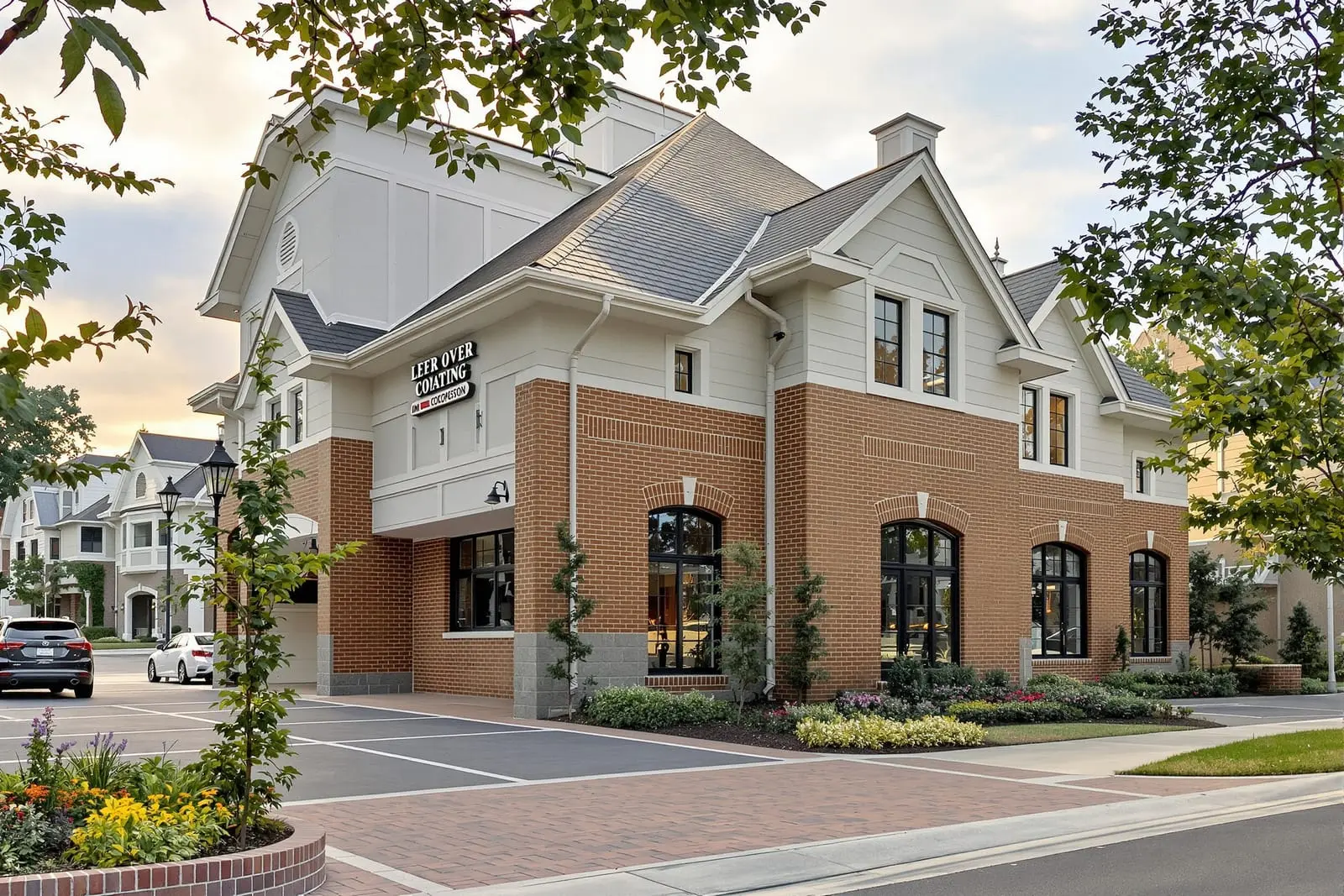
We provide masonry waterproofing in Lexington, KY to protect commercial brick and block walls from moisture damage. Our services include clear sealers, breathable coatings, and specialty treatments for problem areas. Proper prep and application help reduce leaks, efflorescence, and freeze thaw damage.
Vanguard Masonry Lexington provides professional masonry waterproofing throughout Lexington, KY and the surrounding area. Our licensed, insured crew delivers safe, clean, on-time work with a free estimate before anything begins. Call (859) 413-4988 or request your free quote.
Masonry waterproofing for Lexington homes and buildings
Lexington weather is rough on brick, block, and stone. We see freeze-thaw cycles, driving rain, and hot summer sun, all of which push moisture into your masonry and then force it back out. Over time, this movement can crack mortar, pop off brick faces, and pull water into basements and interiors. Vanguard Masonry Lexington focuses on masonry waterproofing that is built around these local conditions, not a one-size-fits-all product.
When we talk about masonry waterproofing, we are not talking about painting a wall and walking away. True waterproofing is about controlling how water gets in, how vapor gets out, and how the structure handles Kentucky’s seasonal swings. That means looking at the wall as a whole: the brick or block, the mortar, the joints, the flashing, and even the grade around the building.
Most of our work falls into two categories. First, breathable penetrating sealers for brick and stone that need to shed water but still release interior moisture. Second, thicker coating systems for foundation walls and high-pressure areas where we need more of a barrier. On many projects in Lexington we use a combination of both, because above-grade and below-grade masonry behave very differently.
Before we recommend anything, we start with an inspection that includes moisture patterns, efflorescence, cracking, and any signs of interior leaks. We often find that what looks like a coating issue is really a drainage or mortar problem. In those cases, Vanguard Masonry Lexington will explain what should be fixed first so you are not paying to seal in an underlying defect.
How we waterproof masonry step by step
A proper masonry waterproofing job follows a clear sequence. Skipping steps leads to coatings that peel, trap moisture, or fail in the first hard winter. Our crews in Lexington follow a process that we have refined on hundreds of local projects.
First, we clean the masonry. For newer or lightly soiled walls, this might be a low-pressure wash with masonry-safe detergents. For older brick with smoke, algae, or heavy efflorescence, we may use specialty cleaners applied by hand and rinsed to a controlled standard. The goal is a sound, clean surface with no loose material, but also no harsh blasting that scars historic brick.
Second, we repair defects. This is where a lot of contractors cut corners. We rake out soft or cracked mortar joints and repoint them with a compatible mortar, often a lower-strength mix for older brick in Lexington’s historic neighborhoods and a modern Type N or S mortar for newer construction. We seal small cracks, reset loose bricks, and address open joints around windows, doors, and through-wall penetrations.
Third, we address movement joints and transitions. Any place where masonry meets another material, like siding or concrete slabs, needs flexible sealant. We remove failed caulk, clean those edges, and install new backer rod and sealant that can handle expansion and contraction without tearing. That step is critical in Kentucky’s hot-cold cycles.
Only after prep is complete do we apply the waterproofing products. For penetrating sealers, we usually apply multiple wet-on-wet coats until the surface is fully saturated, working from the bottom of the wall up to avoid streaking. For film-forming coatings on foundations or retaining walls, we build up thickness in several passes and pay extra attention to corners and cold joints. Once the system is in place, we do a detailed walkaround with you so you know what was done where and what to watch for over time.
Your options: sealers, elastomeric coatings, and foundation systems
There is no single product that fits every masonry waterproofing situation in Lexington. Vanguard Masonry Lexington talks through options with you so you understand how each choice behaves and what it will look like.
Penetrating water repellents are common on brick veneers, chimneys, and stone accents. These products soak into the masonry and chemically bond within the pores, so water beads off the surface while vapor can still escape. They generally do not change the appearance of the wall, although some can slightly deepen the color. These are a good choice when you want to preserve the natural look of brick or limestone.
Elastomeric and acrylic coatings are thicker, paint-like systems used on block walls, stucco, and sometimes very porous brick that has already been painted in the past. They create a continuous film that bridges hairline cracks and sheds water. The advantage is strong coverage and color control. The downside is that they must be correctly matched to the substrate and applied at the right thickness, or they can peel, blister, or trap moisture.
For below-grade and high-pressure areas, such as basement walls or retaining walls that hold back soil, we often use cementitious waterproofing coatings or bituminous membranes. Cementitious coatings bond well to concrete and masonry and can handle active water pressure when properly detailed at joints and penetrations. On some projects, we pair these with drainage boards and gravel backfill so water is relieved before it presses on the wall.
We also consider local factors like Lexington’s clay soils and poor surface drainage in some neighborhoods. If water constantly sits against your foundation, we may recommend coordinating waterproofing with gutter extensions, grading improvements, or French drains. Doing only the wall coating without handling water flow often leads to repeated problems, so we are upfront about what it will take for a long-term fix.
What affects cost and timeline in Lexington masonry waterproofing
Homeowners often ask why two masonry waterproofing quotes can be so far apart. The answer nearly always comes down to prep work, product quality, and access. At Vanguard Masonry Lexington, we spell out each piece so you can compare apples to apples.
Surface condition is the first cost driver. A fairly clean, sound brick wall that needs only minor spot pointing will be much less expensive than a heavily deteriorated wall that requires wide joint repointing, crack stitching, or brick replacement before waterproofing. Historic masonry on older Lexington homes can take more time because we match joint profiles and mortar color more carefully.
Height and access matter as well. Single-story ranch homes are more straightforward. Two- and three-story gables, steep grades, and tight side yards can require scaffolding or lift equipment. That adds both labor and rental costs, as well as extra time for setup and takedown.
Product type and warranty expectations also influence price. Higher-grade penetrating sealers with proven performance on Kentucky brick cost more than hardware-store products, but they last longer and behave predictably. The same goes for professional elastomeric coatings that are applied to manufacturer-specified thickness rather than a quick, thin coat. We can walk you through typical life expectancies so you can decide whether to invest in a longer-term system.
Timeline usually ranges from one day for a small, straightforward sealer application to a week or more for larger homes, multi-building properties, or foundation systems that involve excavation and drainage work. Weather in Lexington is another factor. We schedule waterproofing when surfaces are dry and temperatures are within the manufacturer’s range so the material cures correctly. Rushing a job in the wrong conditions is one of the top reasons coatings fail early.
Why local experience matters for long-lasting waterproofing
Masonry waterproofing is not just a technical skill. Local judgment plays a big role in whether the work actually solves the problems you are seeing. Vanguard Masonry Lexington is used to the specific mix of older brick homes, newer subdivisions, and commercial block structures around Fayette County, and we have seen how different materials react to the same product.
In Lexington’s older neighborhoods, such as those close to the downtown core, we frequently deal with soft, high-clay brick that cannot handle harsh cleaning or very rigid coatings. For those properties, we favor gentle prep, flexible joint repairs, and breathable sealers that protect without locking in moisture. In newer developments with standard modular brick or split-face block, we may suggest different products that hold up better to wind-driven rain on open lots.
Our team also knows the common water entry points specific to this area. Brick ledges without proper flashing, porch roofs tied into masonry without proper counterflashing, and step cracks starting at window corners show up again and again in Lexington homes. We incorporate fixes for these details into our waterproofing scope instead of just coating over them.
Before you hire any contractor for masonry waterproofing, ask exactly what steps they will take before applying a sealer or coating, what products they plan to use on your particular masonry, and how the work accounts for Lexington’s climate. We are happy to walk you through our proposed process in plain language and show you local projects you can look at in person. That way you know what you are paying for and what kind of performance to expect from your masonry waterproofing for years to come.
“
Professional masonry waterproofing and coatings, done right the first time, quality materials, honest pricing, and results that last.
Vanguard Masonry Lexington
Masonry Waterproofing and Coatings Across Our Service Area