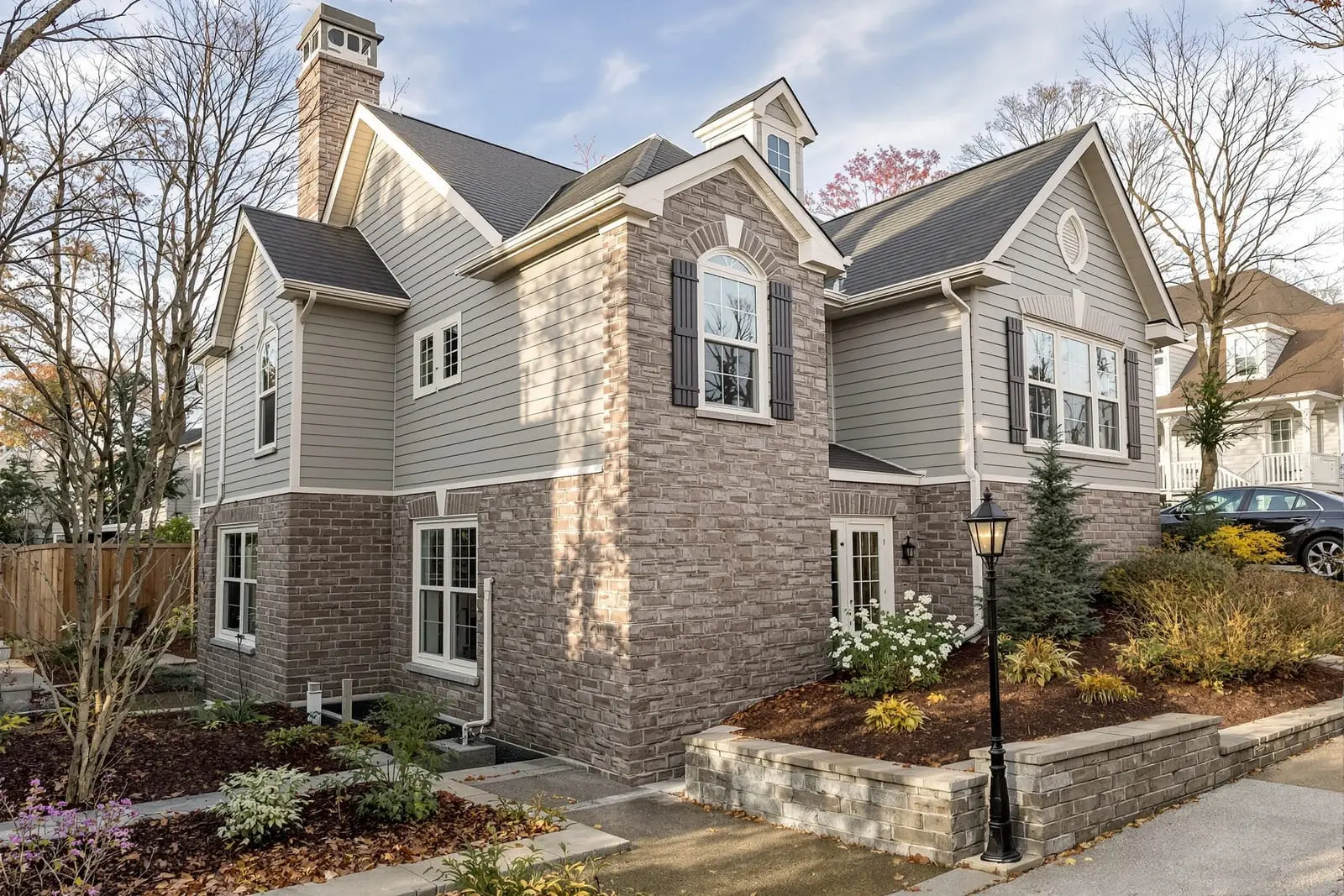
Reliable, professional foundation masonry repair in Lexington, KY from Vanguard Masonry Lexington. Contact us today for a free on-site estimate.
Vanguard Masonry Lexington provides professional foundation masonry repair throughout Lexington, KY and the surrounding area. Our licensed, insured crew delivers safe, clean, on-time work with a free estimate before anything begins. Call (859) 413-4988 or request your free quote.
Foundation & Basement Masonry in Lexington, KY
Homes in Lexington have a wide range of foundations, from 1920s stone basements in neighborhoods like Chevy Chase to poured concrete walls in newer subdivisions around Hamburg. All of them face the same local challenges: clay soils that expand and contract, seasonal moisture swings, and occasional drainage issues. Vanguard Masonry Lexington focuses specifically on foundation masonry repair and basement wall restoration for these Central Kentucky conditions.
When you call us about a concern, we start by listening. We want to know what you see and hear: cracks widening over time, doors sticking after a heavy rain, musty odors in the basement, or water seeping where the wall meets the floor. Then we schedule an in-person inspection so we can look at the full picture: the masonry, the soil, the grading, and any past repair attempts.
Our goal is not just to patch a crack. We look for why your foundation or basement masonry is failing, then design a repair so the same issue does not keep coming back. Because we are local, we understand the specific soil patterns, typical construction methods for different Lexington subdivisions, and how our weather cycles stress your foundation over time.
How We Diagnose Foundation Masonry Problems
A thorough diagnosis is the first step in any solid foundation masonry repair. During an inspection, a Vanguard Masonry Lexington technician walks the interior and exterior of your home, taking notes and photos. Outside, we look at brick or block foundation walls, exposed concrete, and any visible stone. We check for step cracking in brick, horizontal cracking in block, bulging or bowing walls, and crumbling mortar joints.
Inside the basement, we look at both structural and moisture clues. These might include stair-step cracks in block walls, vertical hairline cracks that extend from floor to ceiling, efflorescence (white powder) on the wall surface, rusting on metal support posts, or gaps where the framing meets the masonry. We also check the slab for heaving, settling, or cracks that telegraph movement in the soil beneath the house.
We use levels, moisture meters, and in some cases simple string lines to measure how far a wall is leaning or how uneven a floor has become. In older Lexington homes with stone or rubble foundations, we pay special attention to areas where mortar has turned sandy or loose, since these can quietly reduce load-bearing capacity. After the inspection, we explain what we found in plain language, outline the different repair options, and prioritize what needs attention now versus what can be monitored over time.
Common Lexington Foundation & Basement Issues We Repair
Lexington’s clay-heavy soils hold water after storms, then shrink when it dries out. This constant cycle can cause several specific foundation and basement masonry problems.
One frequent issue is horizontal cracking or bowing in block basement walls, especially in homes built from the 1960s through the 1990s. As outside soil pressure increases, the wall may begin to lean inward. We determine how far the wall has moved, whether there is active movement, and whether the wall can be stabilized in place using reinforcement or if selective rebuilding is the safer option.
Another common problem is vertical settlement cracks in poured concrete foundations. These often start narrow, then widen near windows, doors, or corners. Depending on whether the crack is structural or primarily a water path, we may use structural epoxy injection, flexible polyurethane injection for water control, or a combination paired with exterior drainage improvements.
Older Lexington homes with stone or brick foundations often develop mortar deterioration and moisture intrusion. The stones or bricks may still be solid, but the material binding them starts to crumble. Here, properly matched repointing (tuckpointing) using an appropriate mortar mix is crucial. Using mortar that is too hard for historic masonry can do more harm than good, so we adjust our approach based on the age and type of your foundation.
We also address moisture-specific issues like seepage at the cove joint (where wall meets floor), leaks through form-tie holes in poured walls, and chronic dampness that leads to mold or musty odors. In these cases, masonry repair is paired with drainage solutions so you are not treating symptoms only.
Our Foundation Masonry Repair Methods & Materials
Vanguard Masonry Lexington uses a toolkit of repair methods, selected based on what your particular foundation needs. We are always clear about what we are doing and why.
For cracked or displaced block walls, options may include installing vertical reinforcement, such as steel I-beams anchored at the top and bottom to resist further bowing. In some cases, we remove and rebuild sections of the wall, tying the new masonry into the existing structure with proper reinforcement and bond beams. When rebuilding, we use concrete masonry units (CMU) rated for below-grade use, with steel reinforcement and grout where required.
Cracks in poured concrete foundations are usually treated from the inside with epoxy or polyurethane injection. Epoxy is used when we need to restore structural continuity across the crack. Polyurethane is better when the primary goal is to stop water intrusion because it expands and remains flexible as the wall moves with temperature and moisture changes.
For stone or brick foundations, careful repointing is often needed. We remove failing mortar by hand tools to protect the surrounding masonry, clean out the joints, then install a compatible mortar that balances strength with breathability. Where stones or bricks have shifted, we reset or replace them, ensuring the load is properly transferred to sound material below.
In basements with chronic moisture problems, we may combine masonry repair with interior or exterior drainage solutions. This can involve installing interior perimeter drain channels, sump pumps, or improving exterior grading and gutters so water moves away from the foundation instead of against it. Addressing drainage helps protect your repaired masonry investment.
Cost Factors & What Lexington Homeowners Should Expect
Foundation masonry repair costs vary, but there are predictable factors that influence the price and scope of work. Vanguard Masonry Lexington walks you through these before any work begins so you are not surprised later.
Project size and access are key drivers. A small crack injection with clear access in an unfinished basement will cost far less than rebuilding a long bowing block wall behind finished walls that must be carefully removed and later replaced by others. Depth of the foundation matters too, because deeper walls require more excavation time and safety measures.
The type of foundation influences the materials and time required. Poured concrete crack repairs are typically more straightforward than complex stone foundation repointing, which is more labor intensive. If steel beams, helical piers, or other structural supports are needed in addition to masonry work, we factor those into the estimate and clearly separate structural stabilization costs from masonry-only repairs.
Local conditions also play a role. Some Lexington lots, especially in lower-lying or historically wet areas, have higher groundwater levels. This can increase the importance of drainage improvements like sump pumps or perimeter drains. Investing in drainage at the same time as masonry repair usually saves money in the long run by protecting the repaired areas.
Before you hire anyone for foundation masonry repair, you should expect a written explanation of the problem, options with pros and cons, and a clear, itemized estimate. We encourage Lexington homeowners to ask questions about materials, warranties, and how the work will affect finished spaces like drywall, flooring, or landscaping.
Why Choose Vanguard Masonry Lexington for Foundation & Basement Work
A good foundation repair is as much about judgment as it is about tools and materials. Vanguard Masonry Lexington focuses on careful evaluation first, then tailored repairs rather than one-size-fits-all systems. We are familiar with the different construction practices used in Lexington neighborhoods, from older crawlspace and basement hybrids near downtown to newer full basements in outer subdivisions.
When we work on your home, we take steps to control dust and debris, protect finished areas, and maintain access wherever possible. For interior work, we use plastic sheeting, floor protection, and HEPA vacuums to keep your living spaces as clean as the situation allows. For exterior excavation, we plan equipment access to minimize damage to lawns and landscaping and we backfill and compact carefully to reduce future settling.
We also view communication as part of the job. During the project, we will walk you through what has been completed, what is next, and any conditions we uncover once walls or soil are opened up. If site conditions suggest a better or more cost-effective repair approach than originally planned, we discuss it with you before making changes.
The end goal is a dry, stable basement and a foundation you do not have to worry about. Whether you are planning to stay in your Lexington home for decades or preparing it for sale, professional foundation masonry repair helps protect both safety and property value.
“
Professional foundation and basement masonry, done right the first time, quality materials, honest pricing, and results that last.
Vanguard Masonry Lexington
Foundation and Basement Masonry Across Our Service Area